
Strasbourg and Alsace are among the most popular French regions for international groups, and for good reason: exceptionally well-preserved medieval architecture, a cultural identity at the crossroads of France and Germany, instantly recognizable cuisine, and short distances between sites. An Alsatian itinerary can be completed within a radius of eighty kilometers, making it ideal for a well-paced group trip.
The question of transportation still needs to be addressed. The villages along the Alsace Wine Route are poorly served by train, the historic centers are pedestrianized, and bus schedules rarely align with a group's itinerary. This is precisely where a private coach with a driver becomes invaluable. This guide details how to organize a Strasbourg and Alsace tour for a group from abroad: the essential stops, traffic constraints, logistics to anticipate, and mistakes that can cost time on-site.
Why Alsace is well-suited for group travel
Alsace has a favorable geography. Strasbourg to the north, Colmar to the south, and in between a string of wine-growing villages along the Vosges Mountains. Journeys between stops rarely exceed forty-five minutes. A group can therefore see a great deal without spending the entire day in the vehicle, which isn't the case for longer tours like the Loire Valley or Provence.
The region is also very accessible to foreign visitors. The half-timbered houses, wine cellars, covered markets, and cathedral form a cohesive whole that is easy to describe, even for those discovering France for the first time. For English-, Spanish-, or Asian-speaking groups, this accessibility simplifies program planning and reduces the need for lengthy explanations at each stop.
One last practical point: Alsace combines well with other regions. From Paris, a multi-day tour can easily be extended with a visit to Champagne, along the Reims-Strasbourg axis. We detail this leg of the journey in our guide dedicated to A tour of Champagne, Reims and Épernay, by bus with driver, an itinerary that goes very well with a stay in Alsace.
The essential stops on an Alsatian tour
A well-balanced group program alternates between major cities and villages, guided tours and free time. Here are the most common stops on the tours we offer:
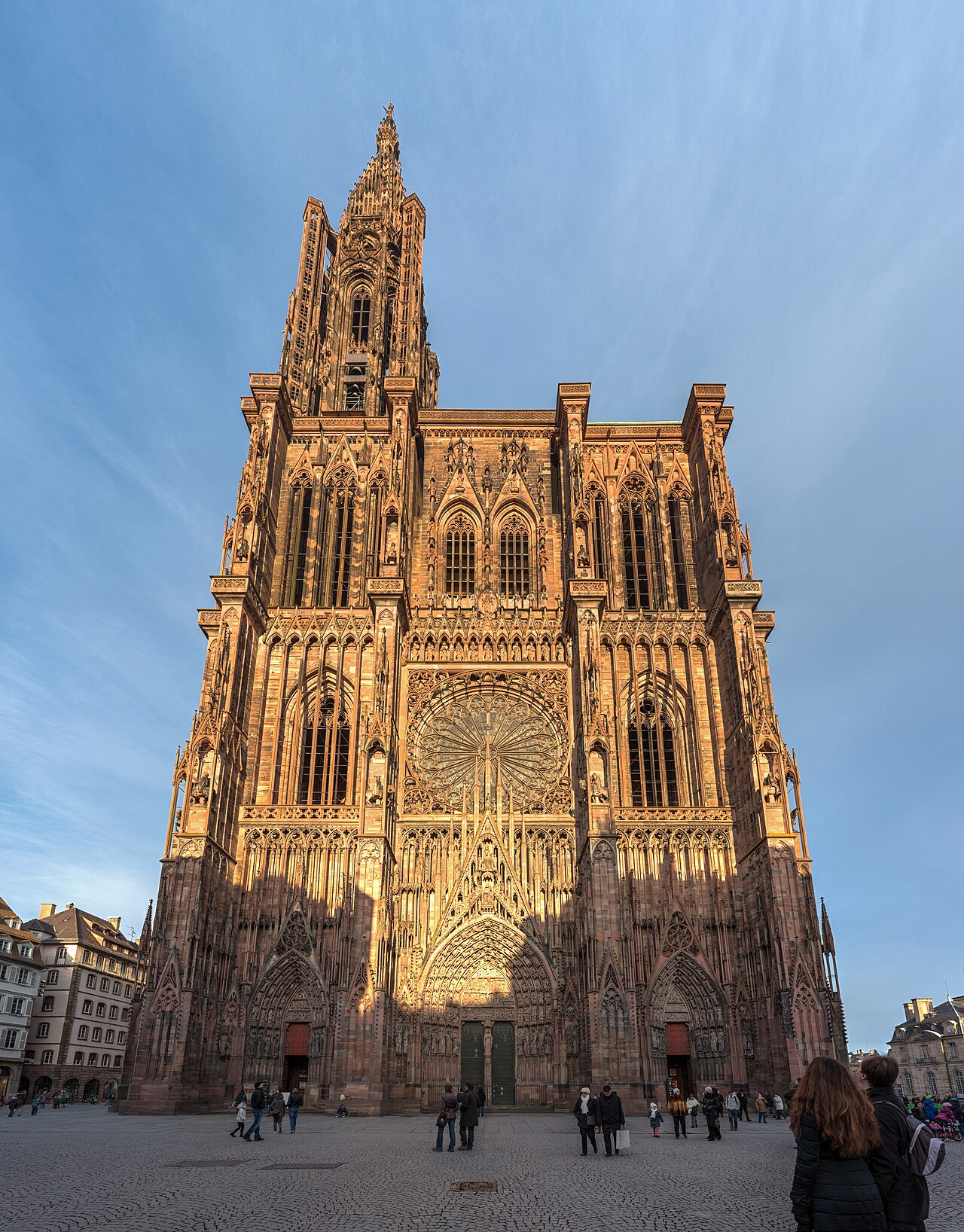
- Strasbourg : Notre-Dame Cathedral and its astronomical clock, the Petite France district, and the European institutions, often requested by institutional and academic groups.
- Colmar : the Unterlinden Museum, Little Venice and the historic center, very popular with groups who only have half a day.
- Riquewihr and Ribeauvillé : two iconic fortified villages on the Wine Route, easily visited on foot in one to two hours.
- Haut-Koenigsbourg Castle : a panoramic view over the entire Alsace plain, with winding road access that requires a vehicle and driver accustomed to the mountains.
- Obernai and Eguisheim : two quieter alternatives, useful for avoiding crowds in high season.
- A wine cellar : tasting remains the most unifying activity for an adult group, provided that booking is made several weeks in advance.
For a group of twenty to fifty participants, two to three stages per day is a good pace. Beyond that, the time spent getting in and out of the vehicle, regrouping, and breaks significantly reduces the actual time spent at each site.
Traffic and parking: what you need to anticipate
This is the point that most surprises foreign organizers. Alsatian historic centers were laid out long before the automobile, and most are closed to large vehicles. In Strasbourg, the Grande Île is pedestrianized: the coach drops off the group at an authorized location on the outskirts of the city center, then parks in a designated area. The same principle applies in Colmar, Riquewihr, and Eguisheim, where specific drop-off areas are provided for tour coaches.
These constraints pose no problem once they are integrated into the program. A driver familiar with the area knows exactly where to drop off and pick up the group, and these meeting points are communicated to the organizer before departure. However, a group discovering these rules on site can easily lose an hour per stop.
For smaller groups, from eight to twenty people, the question is different. A more compact vehicle can access locations inaccessible to large coaches and facilitates access to villages. This is a typical case where the minibus rental with driver proves to be more relevant than a high-capacity vehicle.
Getting to Alsace from Paris or from abroad
Strasbourg is located approximately 480 kilometers from Paris, which is about a five-hour drive including scheduled breaks. Two options are available. The first involves taking the TGV from Paris to Strasbourg, then using a coach locally for the entire regional tour: this is the most comfortable option for longer stays. The second option is to travel the entire route by private coach, which allows for the addition of intermediate stops and the storage of luggage on board from the first day to the last.
For groups arriving by plane, there are multiple points of entry: Paris-Charles de Gaulle, but also the airports of Basel-Mulhouse, Frankfurt, and Zurich, all connected to Alsace by road. We regularly organize pick-up services upon arrival, including welcoming the group and direct transfer to the hotel. In all cases, the hire of a coach with driver throughout the entire stay avoids having to put together a transport solution for each day of the program.
Seasonality: Choosing the right time
Alsace experiences two very distinct tourist peaks. The first runs from May to September, peaking in August. The second, even more intense, coincides with the Christmas markets, from the end of November to December 31st. During this period, Strasbourg and Colmar welcome several million visitors, coach parking is strictly regulated, and hotels are fully booked months in advance.
If your group is planning a trip to the Christmas markets, transportation bookings should be made at least six months in advance. For a typical tour, April, May, June, and September offer the best compromise: favorable weather, vineyards in full bloom, reasonable crowds, and good vehicle availability. October, with the grape harvest and autumn colors, remains a popular time for photography groups and alumni trips.
Frequently Asked Questions
How many days should you plan to visit Strasbourg and Alsace in a group? Two days already allows you to combine a day in Strasbourg and a day on the Wine Route. Three to four days offer a more comfortable pace, with Haut-Koenigsbourg, Colmar and Riquewihr, without requiring participants to spend more than eight hours a day on the road.
Can the coach circulate in the historic centre of Strasbourg? The Grande Île of Strasbourg is largely pedestrianized and closed to coaches. The driver drops off the group at an authorized drop-off point, then parks in a designated area before picking up the participants at the agreed meeting point.
Can the driver also act as a guide for the group? The driver will drive and manage the logistics of the trip, but is not a tour guide. For cultural commentary, we recommend arranging a local guide or a representative from your organization, whom we will transport with the rest of the group.
Plan your Alsatian tour
A successful trip to Alsace hinges on three decisions made beforehand: choosing the right vehicle, planning an itinerary that takes pedestrian zones into account, and booking well in advance for the desired season. The rest is execution, and that's the driver's role: punctuality, convenient drop-off points, luggage management, and flexibility when the itinerary runs behind schedule.
TDS Travel accompanies international groups throughout France, with professional drivers experienced in handling foreign travelers and meeting the requirements of tour operators. To receive a proposal tailored to your Alsatian tour, please provide us with your dates, group size, and planned itinerary by filling out our form. quote request form. We will get back to you soon with a detailed offer.
 French
  English
  Spanish
  Chinese
About The Author: Uniweb
More posts by uniweb